
 By Geoff Fisher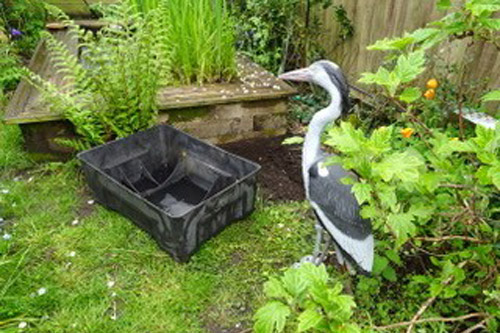
By Victoria Plum
A thrilling evening for me at this week’s meeting of the Reepham & District Gardening Club, as it was my first book signing in an extensive tour. Apologies to those who got held up by the tour bus in Back Street! The wonderful Reepham Community Press has published these Up the Garden Path articles in a book for you to read. I hope you enjoy it.
Simon Harrop from Natural Surroundings was our speaker at the meeting; he is so knowledgeable on plant and insect life and all associated matters. The topic was “Wildlife Ponds for the Garden”, and the main message was that any size pond will enhance and bring extensive and varied wildlife to your garden.
It is helpful to try to restrict nutrients to encourage the right plants (native plants, please) to flourish. If they flourish then all the little creatures will have comfortable hiding and breeding places and will, in turn, flourish.
Don’t have fish; they eat everything. And fish out the old fallen leaves because they add nutrients. Clean a third of the vegetation out every year because water plants tend to be rampant.
To make a bog area, bury old compost sacks, opened up and with some holes, about eight inches below soil level. This will help to maintain a moisture-rich area and will increase the variety of plants you can grow.
I have several ponds in the garden; a large one has Koi carp; two are just washing-up bowls in tucked-away places.
My most recent is a wildlife pond made from a redundant plastic loft water tank measuring about 28 x 20 inches and sawn down to 10 inches deep. It looked very raw at first but quickly settled in. There is a log ramp to allow easy to and fro access for frogs and insects.
I also have “rot holes” or “hoverfly lagoons”; small, not beautiful, but useful, I hope. Cut down a four-pint plastic milk bottle, put some organic material in, then water and ensure you put long projecting sticks so hoverfly larvae can climb out of the water. Mine are in hidden, quiet places and remarkably seem to stay filled with rain water, though you might need to monitor this and move if necessary to catch the rain.
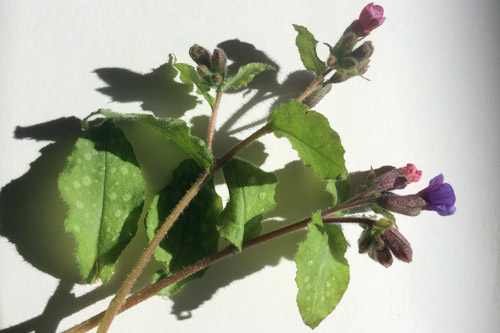
The first peacock butterfly today enjoyed the grape hyacinth, and female bumble bees were on the pulmonaria, this last-named because the doctrine of signatures decreed that the pattern on the leaves looks like a lung and therefore the plant would cure lung problems. The country name for this plant is “Soldiers and Sailors” because there are often red and blue flowers on the same stem.
Please join us at 7.15 pm on Tuesday April 21 in the Town Hall, Church Street, Reepham, which marks the club’s AGM, always swiftly dealt with. The popular speaker is Guy Barker – The Naked Gardener. We enjoyed him last in 2024. The theme is “Things for Spring”.
Top: Wildlife pond in progress. Below: Lungwort aka Pulmonaria aka Soldiers and Sailors. Photos: Tina Sutton