
 By Geoff Fisher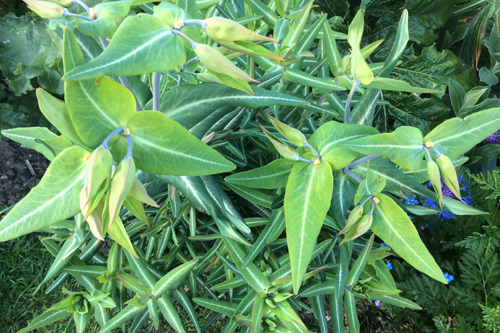
By Victoria Plum
Nature abhors a vacuum. Left to its own devices, ground soon fills with growing things. Just look around – every plant has a strategy to somehow ensure its survival.
Some gardens, such as formal rose gardens, have each plant surrounded by bare soil, which makes it easy to keep weed-free. There is the expression that if you hoe where there are no weeds then there will never be any weeds, but it does seem a dreadful waste of time.
In any case, if you hoe so assiduously you deny yourself all those lucky little bonus and surprise seedlings that are keen to grow given half a chance.
Caper spurge, an effortless and elegant plant I really like, is always in the garden. I never planted it but I leave it to grow if there is room; pull it up if it’s in the way.
I’ve been practicing “chop and drop”. When tidying the garden, you chop, trim and snip but instead of carrying the bits to the compost heap and then back to your soil when rotted down some time next year (lots of work), you just leave the bits on the ground to rot in situ, giving homes and cover to all the tiny creatures we need to foster.
This year I’m extending this principle to weeds. I pull up the bindweed, goosegrass, etc., and just leave to desiccate on the grass or tops of plants. I know it looks unsightly for a day of so, but I’ve been watching and it soon disappears.
Everyone likes a recipe and the speaker at the Reepham & District Gardening Club in May, Annette Hurt, a keen advocate of no digging and natural gardening, suggested the following.
Fill a jar with a variety of, or only, comfrey, nettles and dandelion leaves, 200 grams in total. Layer in 85 grams of brown sugar, weigh down with a stone, cover with gauze and leave for five days to will ferment, then dilute 1:500, (yes, really) to fertilise your plot. Mine is already fermenting in the kitchen.
Annette mentioned The Garden Folk Mag, a free online monthly magazine about gardening; it looks interesting.
Annette lives in the Broadland village of Filby, which is famed for its fabulous, award-winning floral displays. Open gardens there on 18–19 July, so I intend to go and study her garden. She keeps bees, too.
Next month, on Tuesday 16 June at 7.30 pm in the Town Hall, Church Street, Reepham, we meet to hear Andrew Sankey talk about developing a cottage garden in Bracondale, Norwich. All welcome, bring your friends.
There is always something of interest to discover at the gardening club, and at each meeting this year we are encouraged to bring plants to swap, so see what you have spare. Someone else is bound to want it.
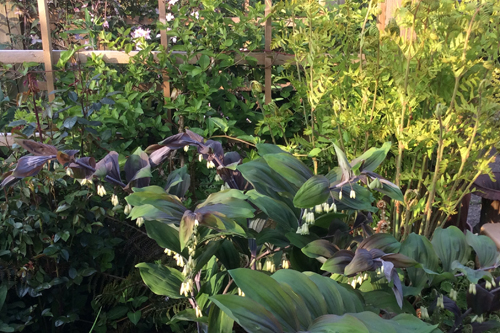
Above: Bird’s eye view of caper spurge. Below: Black Solomon’s seal flowering among ferns, roses, honeysuckle and clematis. Photos: Tina Sutton